Energy Recovery System
ERS
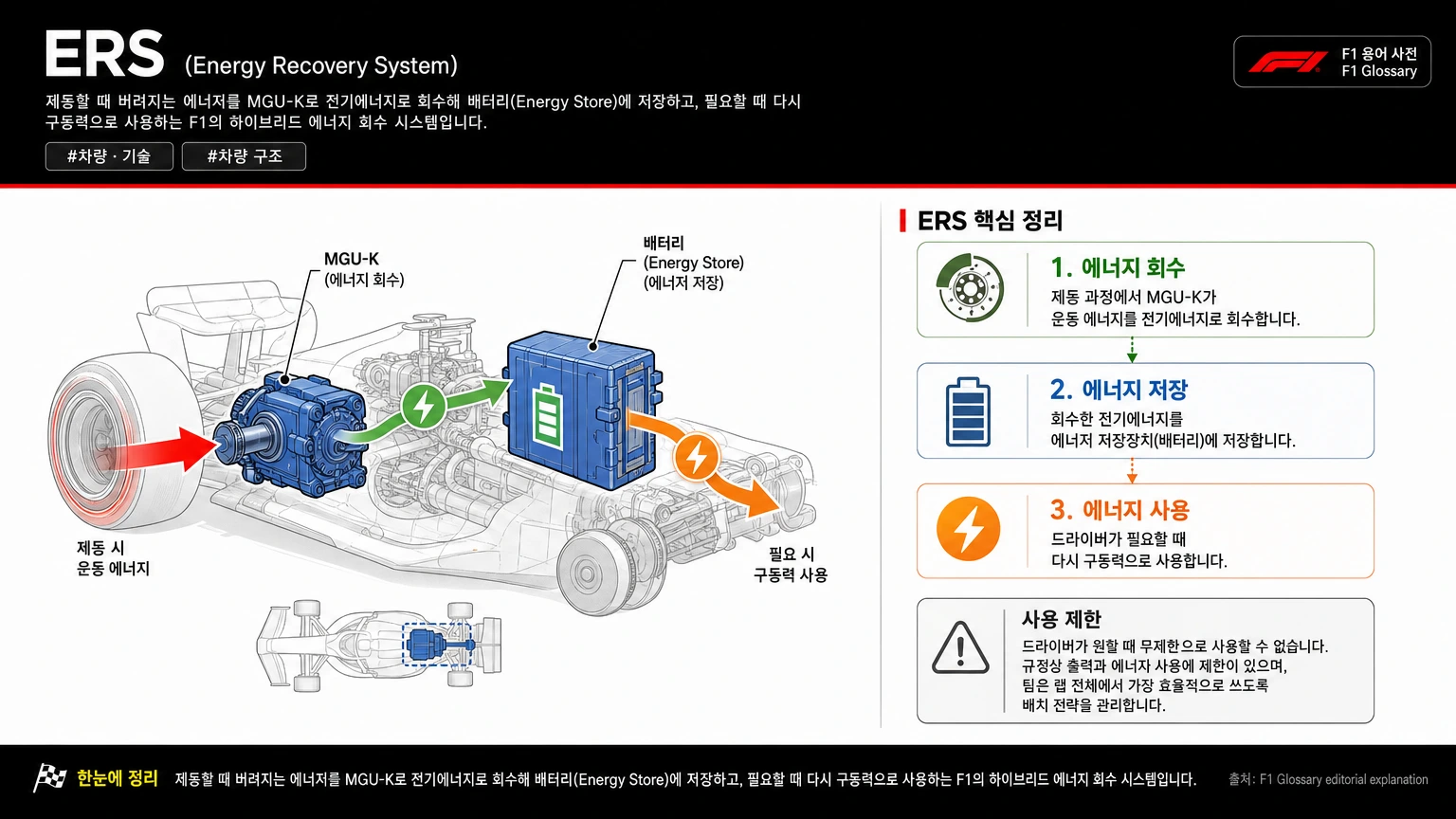
The hybrid energy recovery system in F1 captures the energy wasted during braking through the MGU-K, converting it into electrical energy and storing it in the Energy Store (battery), which can then be used to provide additional power when needed.
🏆 Structured Case
General ScenarioWhy lift before the braking zone?
On a maximum-attack lap, a driver normally stays on the throttle until the braking point and then brakes hard. With lift and coast, the driver comes off the throttle earlier, allows the car to coast and only then begins braking. This can cost some lap time but reduces fuel consumption and brake load. With the 2026 power units, lift-off can also be used for controlled electrical energy recovery, giving the technique an additional energy-management dimension.
With the 2026 power unit, the lift phase can also be used for electrical energy recovery, linking the technique to ERS management.
🏆 Structured Case
General ScenarioWhen does 2026 Overtake Mode become powerful?
The 2026 Overtake Mode is not simply an unrestricted boost button. A driver must be within one second of the car ahead at a designated detection point to gain access to the mode on the following lap. When available, it allows additional electrical energy recovery and a more powerful deployment profile so the car can sustain a higher speed for longer. Drivers therefore have to manage pace and battery state before the actual overtaking opportunity.
The advantage comes from electrical energy storage, recovery and deployment, directly linking Overtake Mode to ERS.
📺 Race Context & Viewing Tips
Frequently asked questions
What kind of energy does the ERS recover in current F1 cars?
Can a driver use ERS energy without limits whenever they want?
🔎 Looking for another F1 term?