Grip
그립
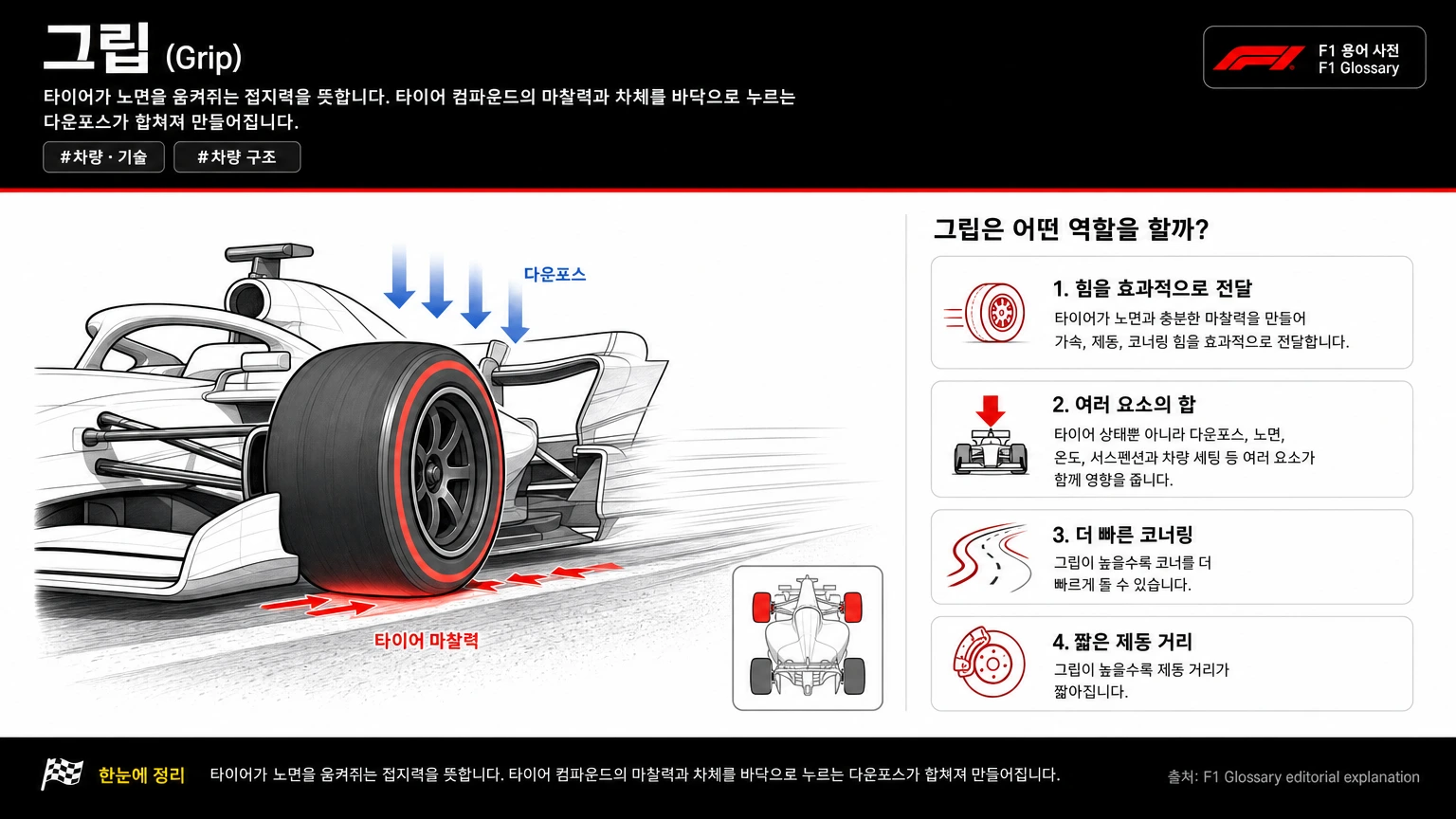
Grip refers to the traction of the tires on the track surface. It is created by the frictional force of the tire compound combined with the downforce that presses the car onto the ground. Higher grip allows for faster cornering and shorter braking distances, making it a key indicator of a race car's performance.
🏆 Structured Case
General ScenarioWhy does the track get faster late in qualifying?
In qualifying, lap times often improve late in the session even when the same car and tyre compound are used. As more cars circulate, rubber is laid onto the racing line and the available grip of the track surface increases. This track evolution encourages teams to begin their final flying laps as late as practical, when the circuit is at its fastest. Waiting too long, however, also creates the risk of losing the lap to a yellow flag or the end of the session.
As rubber builds up on the racing line, available grip increases and allows faster cornering and lap times.
📺 Race Context & Viewing Tips
Frequently asked questions
What does it mean when an F1 car has good grip?
Is grip determined only by the tyres?
🔎 Looking for another F1 term?