Intermediate tyre
인터미디어트 타이어
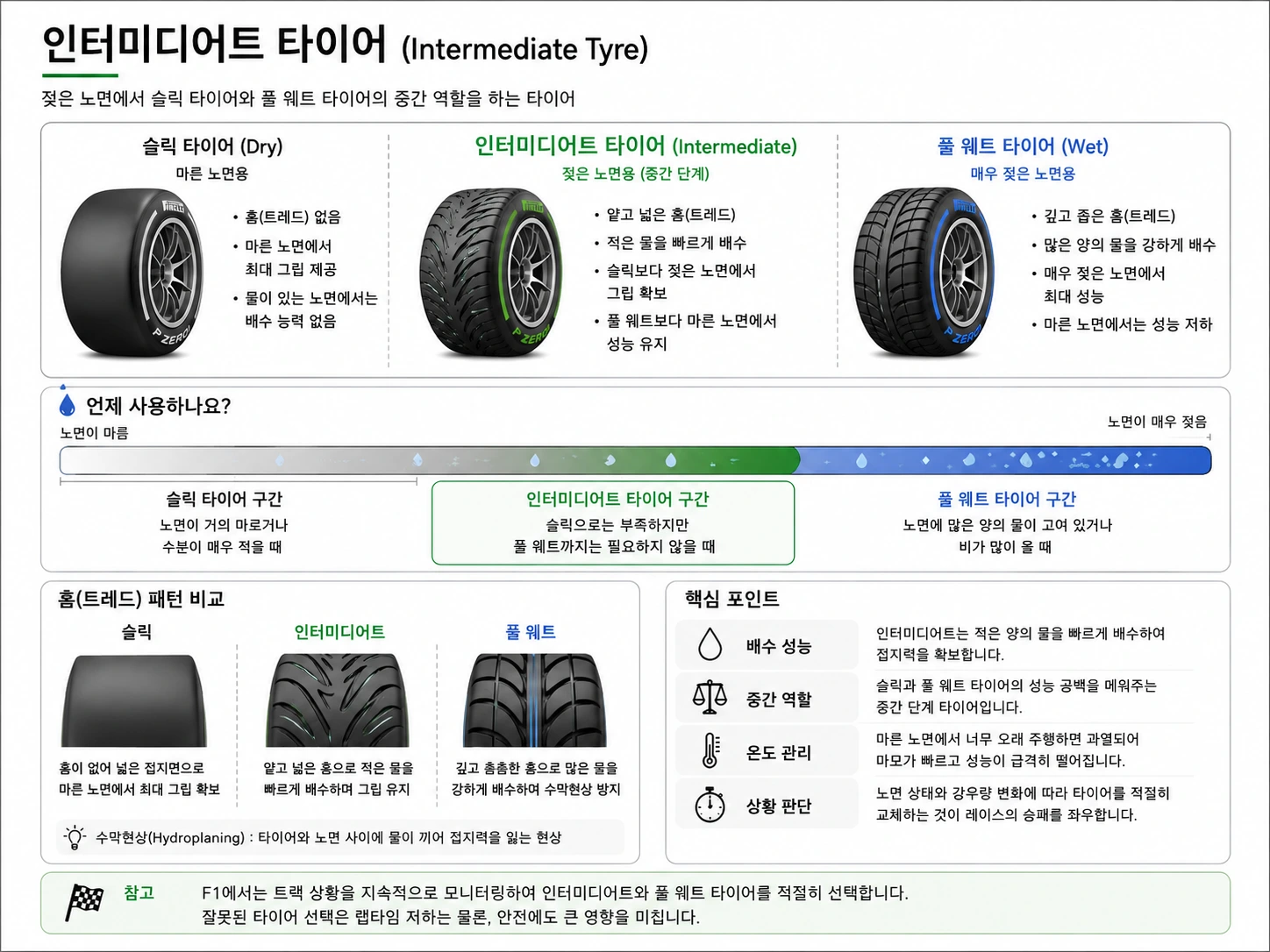
These are the tires used when the track surface is slightly wet but not enough to warrant full wet tires. They have drainage capabilities that can expel up to 30 liters of water per second at speeds of 300 km/h.
🏆 Structured Case
Race EventThe late rain call that decided Sochi
Late in the 2021 Russian Grand Prix, staying on slick tyres initially appeared to be the faster option as rain began to fall. As conditions worsened, Lewis Hamilton switched to intermediates while race leader Lando Norris remained on slicks. Norris eventually slid off as grip disappeared and Hamilton took the lead. The key decision was not simply whether it was raining, but when the grip advantage of intermediates became greater than the time lost in the pit stop.
Once the rain intensified, the grip advantage of the intermediate tyre changed the outcome of the race.
🏆 Structured Case
Race EventMercedes double-stacked both cars as the rain arrived
When rain arrived on Lap 28 of the 2024 British Grand Prix, Mercedes called Lewis Hamilton and George Russell into the pits on the same lap and switched both cars to intermediate tyres. The crew completed the double stack without a major delay between the two cars. A double stack can change the strategy of both team cars at once, but any delay on the first car can force the second car to wait in the pit lane.
The arrival of rain forced both cars to switch quickly from slicks to intermediate tyres.
📺 Race Context & Viewing Tips
Frequently asked questions
When are intermediate tires used in F1?
What is the difference between intermediate and full wet tires?
🔎 Looking for another F1 term?